My Magical Journey as an Apple Learning Coach at Ruifang Junior High School

已更新:2025年10月6日
A Ripple from Taiwan’s Northeast Coast to the World
From a classroom with just a dozen iPads to camera crews sent by Apple Headquarters—this is a true story of trust, partnership, and continuous learning.
By Ying-Pin Lin (林英斌), Apple Learning Coach, Ruifang Junior High School, New Taipei City

When the Cameras Pointed at a Rural School, I Saw True Light
IIn the summer of 2025, the air in Ruifang felt subtly different. A professional film crew bearing Apple’s logo set up cinema-grade cameras—not in some elite urban school, but here at our campus on Taiwan’s northeast coast, where drizzle and dazzling sun often trade places: Ruifang Junior High School, New Taipei City. The moment felt surreal. As a long-serving visual arts teacher and an Apple Learning Coach (ALC), I watched my colleagues and students stand before the lens and confidently share how they use iPad to learn, create, and explore the world. My heart swelled with complex emotions.
This isn’t a tale of “technological miracles”; it is a story about partnerships. It carries a team of educators who, despite limited resources, exam pressures, and frequent staff turnover, step by step ignite students’ self-directed learning through trust, collaboration, and the right tools, building a professional community that can grow on its own. The cameras captured our journey; through this article, I want to share how it began and the precious lessons we have learned along the Apple Learning Coach path.
The Starting Point — An Adventurer’s Turn and Ruifang’s Real-World Challenges
Before becoming an ALC, I was an adventurer-type teacher—eager to try new technologies and software, with my classroom always filled with the newest digital scenery. Our iPad program sprouted from a dozen devices in my classroom, and I saw the promise technology held for teaching. Yet I realized that if personal passion cannot spread, it remains classroom fireworks—brilliant but fleeting.
Ruifang faces unique challenges. Our students are sincere and lovely, but rural schools like ours commonly struggle with: high teacher turnover, which hinders the transmission of experience; relentless exam pressure, which makes teachers hesitate to innovate; and achievement gaps, notably a higher proportion of “C-level/Needs Improvement” in the Comprehensive Assessment Program—precisely what the “Reduce-C Plan” aims to address.
In this context, when I had the chance to join the Apple Learning Coach program, my intention was clear: I no longer needed to fight alone; I needed partners to walk beside me. My role had to shift—from a technology adventurer to a coaching-cycle practitioner who understands peer pressure, builds trust, and provides systemic support. The greatest challenge was: How do we help already overburdened subject teachers integrate Apple technology effectively so that tech becomes an assistive force rather than yet another source of stress? That was the true beginning of my ALC journey.
Building Bridges of Trust — My ALC Coaching Playbook
The core of coaching has never been the technology itself, but people and relationships. Facing teachers’ pressures and doubts, I developed a Ruifang-specific coaching strategy built entirely on trust.
Shared goals: walking forward together. I began by listening. Entering the office wasn’t to “sell” an app, but to understand teaching pain points. Is student motivation low? Group work hard to manage? Starting from real needs, we searched for shared goals. When teachers realized I sought not to add burdens but to solve problems with them, the bridge of trust began to rise.
Layered support: the right help at the right time. I soon found teachers differed in attitude and starting point. I grouped them into Adventurers, Travelers (seeking reliable methods), and Homebodies (more traditional and cautious with tech). I offered differentiated support: new tools and ideas with adventurers; lesson design and assessment with travelers; and “small steps” that immediately solved pressing issues for homebodies—building confidence along the way.
Small steps & the coaching cycle. I believe “slow is fast.” We began with one-on-one accompaniment, building partnership and open channels. Then we established a coaching cycle: pre-class discussion, in-class observation or recording, and post-class reflection. Especially in-class recording—it lets us view the classroom objectively, not for evaluation but to discover opportunities to refine teaching and deepen student interaction. Once this cycle took root, the tacit understanding between teachers and me blossomed; we started to look forward to every collaboration and change.
The Perfect Fusion of Digital and Traditional — Introducing and Reflecting on Goodnotes Classroom
One of the luckiest and most crucial steps of my ALC work was introducing the Goodnotes Classroom digital-note-taking app early at Ruifang; we were honored to be among the first pilot schools worldwide. This experience perfectly illustrated the integration of digital and traditional learning.
Why a “perfect fusion”?
With iPad and Apple Pencil, students retain the warmth of handwritten thinking, the freedom of doodle-style note-taking, and complete records of formula transformations in problem solving—the most precious parts of traditional learning. Meanwhile, they gain digital advantages: organizing and searching notes with ease; inserting images; creating custom stickers and tape; and receiving immediate, specific interaction and feedback from teachers. It doesn’t replace traditional learning with digital; it breathes new life into traditional notebooks.
The thoughtful rollout quickly resonated with teachers and students. Tech proficiency was no longer a barrier to using iPad. In class, teachers could view each student’s problem-solving process in real time; via AirPlay, any student could join as a co-teacher on the big screen. In English, speech could be dictated directly into notes. A high-quality digital notebook dramatically boosted interaction and efficiency, while better documenting learning.
Recognition and values.
Goodnotes later recognized our accomplishments, featuring our school and interviewing us—a huge encouragement for teachers and students alike. This success also embodied the five core values of Apple Learning Coach: Learner-Centered, Empowerment, Innovation, Collaboration, and Continuous Growth. With its cross-disciplinary power, Goodnotes Classroom has become a pivotal part of my ALC digital learning strategy.


Seeing the Ripples of Growth — From Seed Teachers to the Whole Community
If Goodnotes Classroom marked a successful starting point, the real transformation appears in each teacher’s growth story.
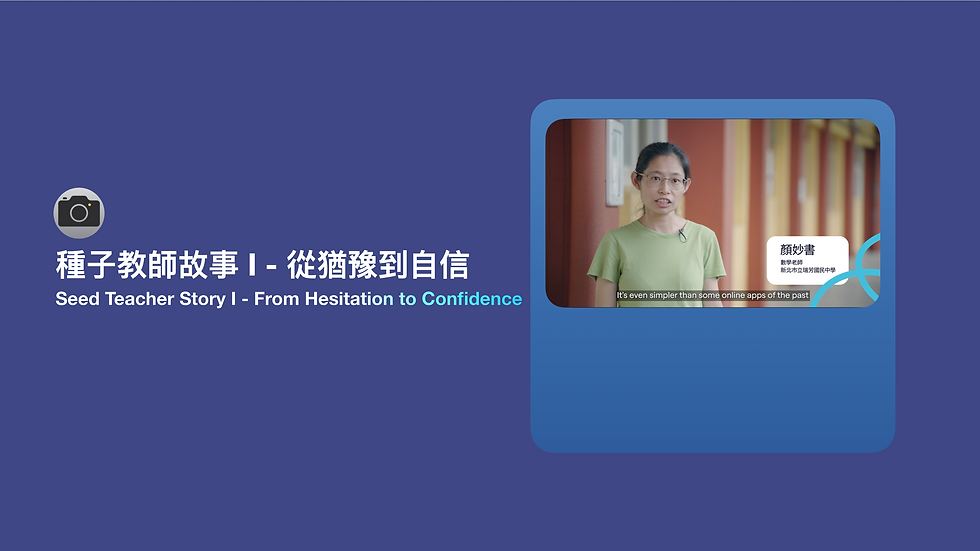


Story One: From Hesitation to Confidence — Teacher Miao-Shu
Video source: Apple.com
Amid exam pressures that often make teachers hesitate to innovate, I invited our mathematics teacher, Ms. Miao-Shu, to become my partner. We quickly launched the coaching cycle, refined lesson details on iPad, and—with her consent—shared her excellent lessons to our community. Under Apple’s cameras, when students raised their iPads, their eyes sharpened with focus—a beautiful curve drawn by trust in teacher-student collaboration.
Story Two: Learning as Partners — From Tech Fear to International Exchange Guides — Teachers Claire & Taryn
Claire is an excellent English teacher who initially feared technology. She and our foreign teacher Taryn were among my earliest coaching partners. I watched Claire move from cautious taps on an iPad to proactive learning and experimentation—a transformation I’m very proud of. As the lead teacher for international education, she guided students to produce lively self-introductions with Keynote and mixed-media culture boxes. This was more than a technical exercise; we infused Everyone Can Create (ECC) storytelling so the work brimmed with creativity and personal style—winning praise from partner schools in Japan and Australia.
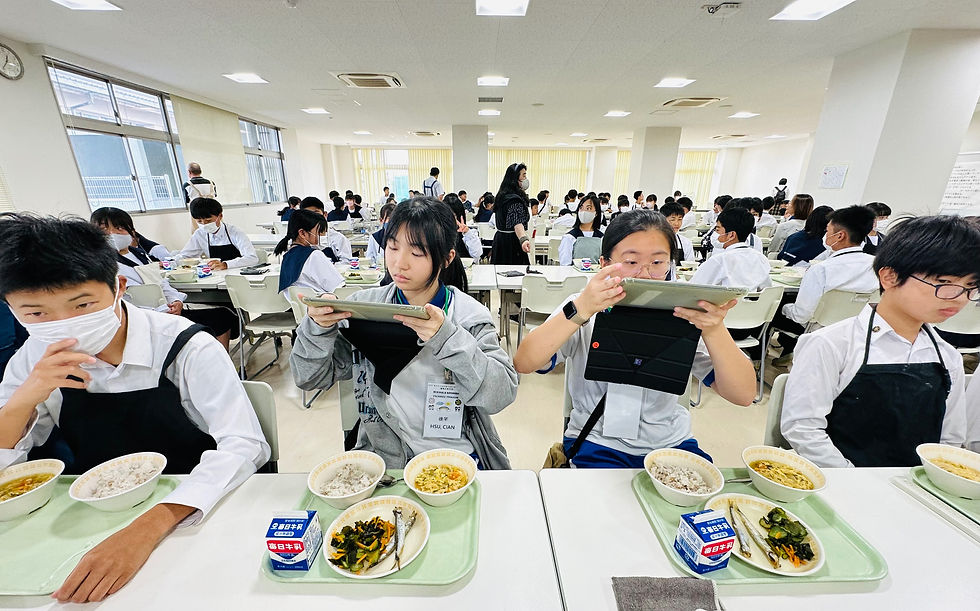
During the Japan exchange, students carried iPads and brought Goodnotes Classroom into the experience. We observed iPad playing three roles across the inquiry-learning stages:
On-Site: iPad as digital senses: the camera freezes the bowing angle; the recorder captures the rhythm of applause; Goodnotes quickly notes the order of refreshments; the translation app looks up Japanese—no clue is missed.
Organizing: iPad as a thinking edit desk: the messy clues in Goodnotes are rearranged; scattered details start to form a meaningful story.
Expressing: iPad as a story stage: Pages fuses text, photos, hand-drawings, and audio into a flippable digital storybook. With a QR code linking to an NHK news segment, our small discoveries connect to a bigger world.
Claire’s story proves that once a teacher overcomes inner fear, technology becomes the strongest wings for realizing educational ideals.


Story Three: The Adventurer’s Metamorphosis — From Broad Exploration to Deep Empowerment — Teacher Lin-Jun
Another teacher, once an “adventurer” like I used to be, loved trying tools but struggled to translate exploration into classroom practice. Through the coaching cycle we focused on pedagogy and planning. Now, he’s not merely a technology explorer but a true learning facilitator. More importantly, he proactively mentors students in effective use of a self-directed learning system, becoming a key force in personalized learning.

Systemic Impact: Tackling Challenges, Seeing Results
Behind these personal stories lies systemic transformation.
Self-directed learning on iPad and Reduce-C outcomes: We positioned iPad as the core vehicle for student self-learning. The data spoke loudly: in 2024, students’ self-initiated quizzes far exceeded teacher-assigned quizzes. This student-driven momentum helped our school earn consecutive recognition from the Education Bureau for successful implementation of the Reduce-C Plan, with fewer lagging students in entrance examinations—concrete results from combining Apple technology with educational strategy.
Building an Apple Teacher community: To sustain momentum, we promoted Apple Teacher certification. About one-quarter of our teachers are already certified, and our goal this year is 50%. To foster a positive atmosphere, I present Pages-designed certificates together with the principal—public honor that energizes the entire community.
From learners to leaders: Perhaps most excitingly, our seed teachers now confidently lead school-wide planning meetings, sharing their practices and truly evolving from learners into in-house experts who can guide others.
“Magic” Catalysts and a Digital Treasury for the Community
To enliven community interaction—especially to pass on know-how amid high teacher turnover—we designed tangible “magic tools.”
The most popular is an App Rubik’s Cube. I printed commonly used app icons on the cube; during gatherings, teachers spin it and share teaching stories or tips about whichever app appears. It breaks the monotony and turns sharing into a game. This little tool—unique to our community—has become a memorable medium for building shared language and memories.
We also printed Everyone Can Create (ECC) activity guides into card decks for teachers to grab and go for quick inspiration.
Beyond physical aids, a crucial ALC task is guiding teachers into Apple’s vast digital resource trove—the Apple Learning Center. I tell them that ECC cards are a starting point; more complete curricula and richer project ideas await in this digital hub. My work is to build the bridge so teachers can connect to and make the most of these high-quality resources.
Overcoming Ripples — Building a Community that Sustains Itself
Given the realities of teacher turnover in rural schools, sustained impact hinges on community continuity and internalizing the ALC spirit. We aim to build a professional learning community that renews and grows on its own.
Within this community, the ALC core values—empowerment, innovation, collaboration, growth—are continually practiced and passed on. Beyond internal mechanisms, I keep our doors open to the world: as part of Taiwan’s iPad Seeding Teachers Promotional Team, I scout great ideas from outstanding educators and route them home—so our school never runs out of fresh energy.
More importantly, this sustainable culture continues to support and encourage our seed teachers. Our goal is for them not only to inherit achievements but to be inspired to pursue higher-level professional growth and leadership roles—ensuring the ripples of impact keep expanding.

After the Cameras, Our Journey Is Just Beginning
When the filming wrapped and campus quieted down, my heart was still pounding. The shoot was more than documentation; it was both a retrospective and a preview. It gave us a chance to pause and clearly see how far we’ve come—to see the confidence radiating from students thanks to self-directed learning, and the rekindled passion in teachers’ eyes due to instructional innovation.
The cameras captured the joy of teachers guiding students to reach the world with Keynote, the breakthrough as teachers finally embraced iPad, and the deep focus of students animatedly discussing their Goodnotes notes. All these images stem from a simple belief—my ALC motto: “Everyone is a learner.” Not only students, but teachers, administrators, and I—as a coach—we are all learning and growing on this journey.
From a dozen iPads in Ruifang to a success story recognized by Apple, this journey has surpassed my earliest imagination. The honor belongs to every Ruifang partner who opened their hearts and walked forward together. The cameras may have left, but our story continues—because real change doesn’t happen in front of a lens; it happens every day, in every class. Our journey is just beginning.


留言